
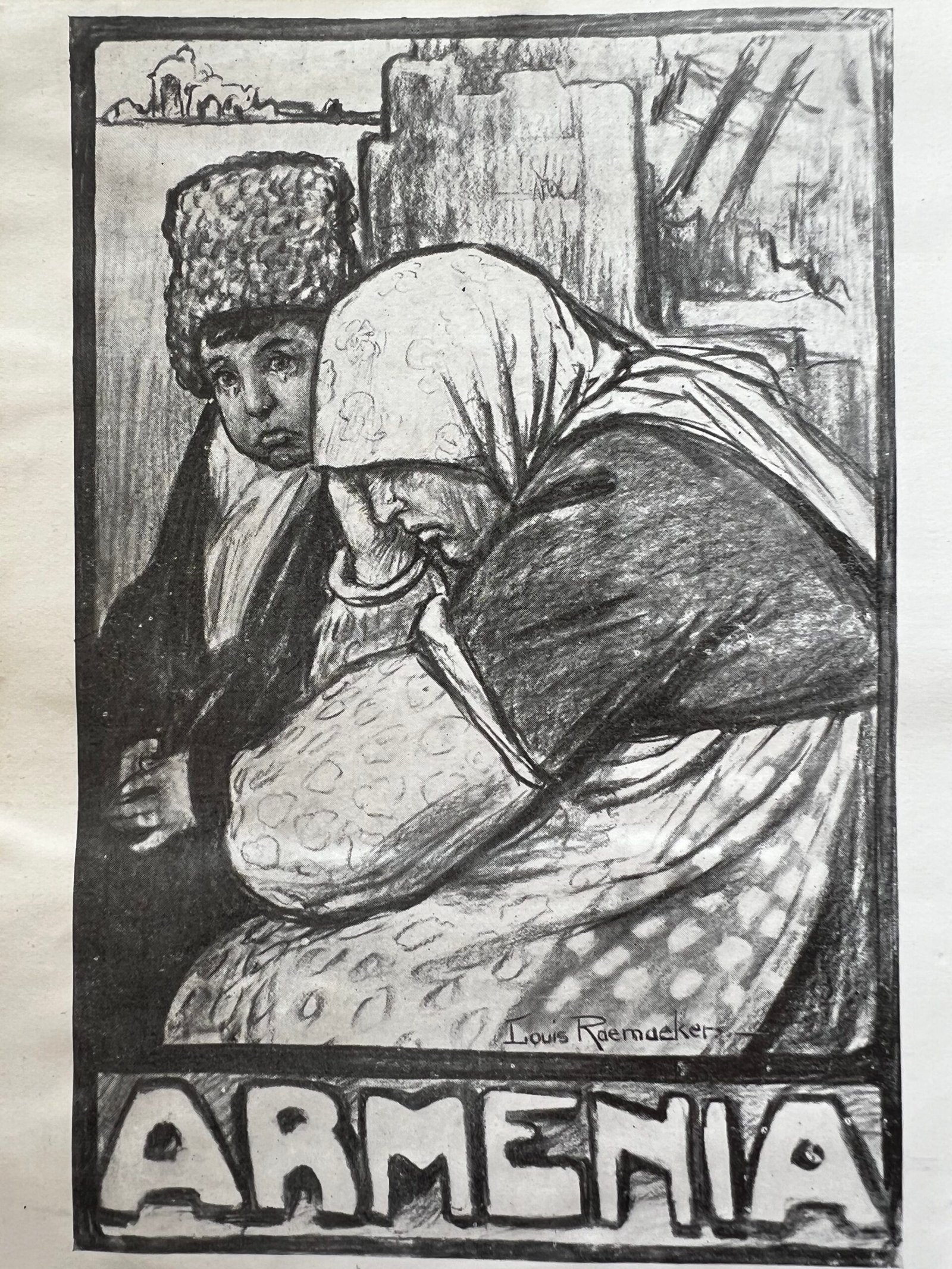
April-September 1916
Margery was in England for less than a month. She might have stayed longer had she achieved what her father called “her first ambition” — “to nurse German soldiers to requite the kindness she had received and to satisfy herself that they had been well treated.” She wrote to the War Office, but her timing was unfortunate. She received a “curt” reply suggesting she read the newspapers. The Government Committee on the Treatment by the Enemy of British Prisoners was about to release what the Daily Telegraph thundered was “an account of German brutalities which beggars all records and makes such incidents as the Black Hole of Calcutta appear as almost venial crimes”.
Typhus had broken out a year earlier at a camp near Wittenberg where 15 000 British, French and Russian prisoners were crammed onto ten acres. The Germans pulled their people out of the compound and watched the epidemic rage from a safe distance beyond the barbed wire, allegedly earning the commandant, one Dr Aschenbach, an Iron Cross. He did send in six captured Royal Army Medical Corps officers from another camp but otherwise refused appeals for medical assistance or supplies. Of the 250-300 British prisoners who were infected 60 died, including three of the RAMC men. The Telegraph pointedly reminded readers that “in Serbia during these very months British medical officers and British nurses were working night and day and sacrificing their lives to relieve the suffering of the Austrians, themselves attacked by the same deadly plague.”
Margery looked for something else. The Red Cross had nothing. Neither, at first, did the Lord Mayor of London’s Armenian Refugees Fund. Then it changed its mind. Daughter and father were summoned to the House of Commons to meet Aneurin Williams MP, the Fund’s chairman. Would she be interested in joining a “Pioneer Party” to Armenia to assess what could be done for the survivors of the 1915 genocide? “There are hundreds better qualified than I am who would give anything to go,” she replied, according to her father. “Never mind,” said the MP. “We want you.”
“We” included Dr Graham Aspland who had signed on as the mission’s chief medical officer and was also just back from captivity in Serbia, and two other nurses, Beatrice Kerr, who had been in Kragujevač with the redoubtable Mrs Stobart, and Elizabeth Armstrong. If they had not encountered Doña Quixota in the flesh, Aspland and Kerr had surely heard of her. It may have helped Margery’s case that her father was then chaplain of Ely Cathedral. The Bishop of Ely was one of the Fund’s vice presidents. In the end, though, it was up Rev. Harold Buxton, the leader of the party and the Fund’s secretary, to pick his team. If there had been doubts about Margery, he must have overruled them.
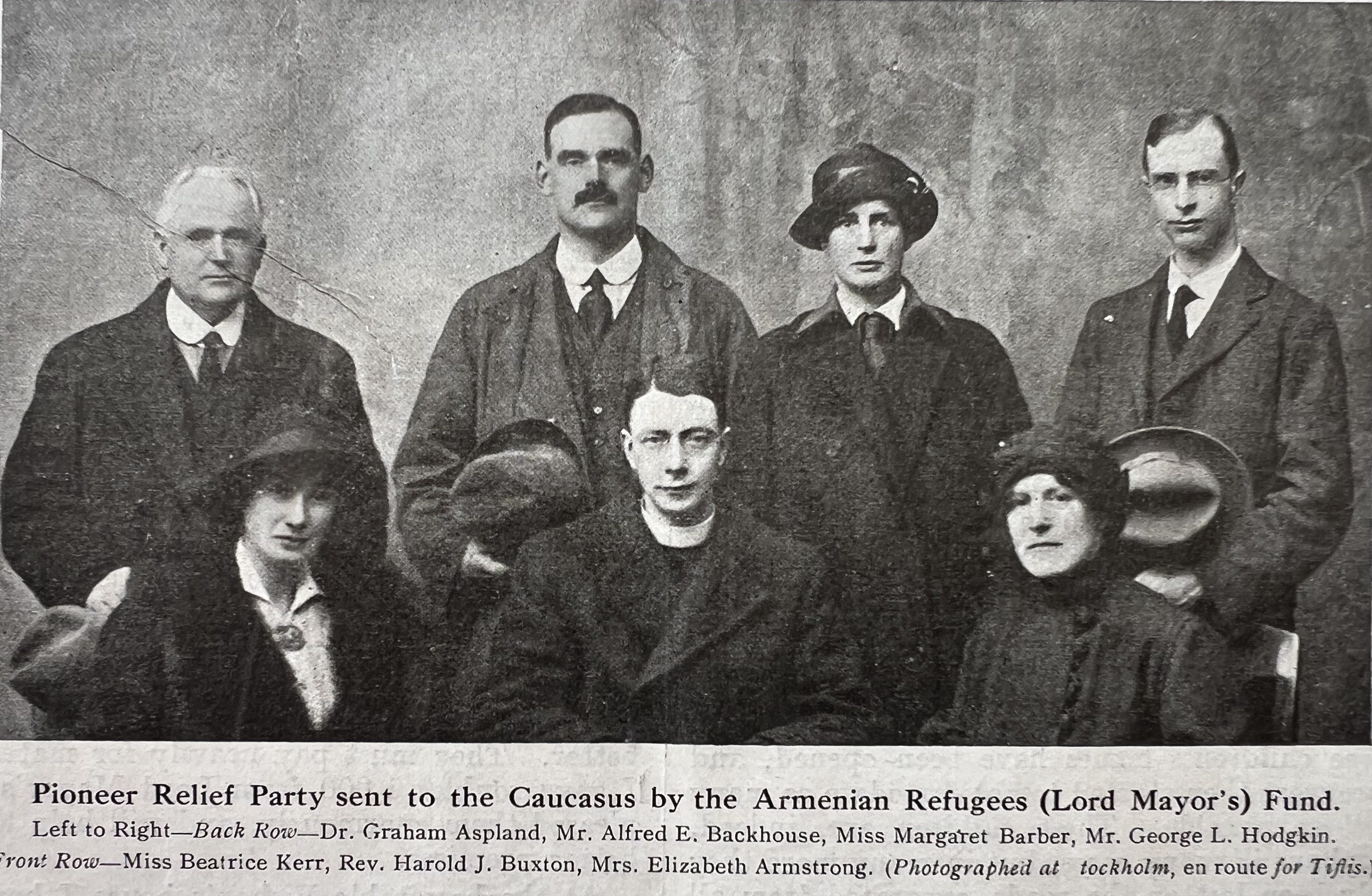
Like Margery, Buxton had taken an emigrant ship to Canada early in his career, finding work as a farm hand in Ontario. It was to this experience that Buxton owed “that sense of sympathetic brotherhood with labour which is one of his chief characteristics”, thought the author of a glowing profile in Ararat, a London-based journal devoted to Armenian affairs. Great-grandson of Sir Thomas Fowell Buxton, the abolitionist, he took holy orders in 1904 and headed east to serve as chaplain of the Burma Railway Co., ministering to its employees on the line between Rangoon and Mandalay. Ill-health forced him back to England where he landed a curacy with his cousin, Rev. Conrad Noel, the Red Vicar of Thaxted who owed his living to the Duchess of Warwick, founder of Studley, the agricultural college for surplus women which had readied Margery for recruitment and dispatch to Canada by the Colonial Intelligence League. As for Dr. Aspland, Margery would later write that she had found him…
…a most extraordinary intricate character, so many-sided, you don’t know what to expect: 1. The pious missionary. 2. The stern surgeon. 3. The “fast” man of the world. 4. The great traveller. 5. The authority on China. 6. The sympathizer and champion of the weak. 7. The bully and male martinet. 8. The diner out, and raconteur. 9. The surly bear. You never know what he will be next. He’s worth meeting.
Born and trained in Toronto, Dr Aspland began his career repairing injured deep-sea fishermen at a cottage hospital he ran with his wife, an English nurse, on an ice-bound island off Labrador. The couple moved to China as medical missionaries in 1905. Becoming fluent in Mandarin, he was appointed professor of obstetrics at Peking Union Medical College. During the fighting that saw the overthrow of the Qing Dynasty, he organized China’s first Red Cross field hospitals. When pneumonic plague struck in northern China, he immediately volunteered his services at no little personal risk for which a grateful government gave him its highest award for foreigners, the Double Dragon. On leave in England at the start of the war, he joined the Royal Army Medical Corps and served in France, winning the Legion of Honor, and then in Serbia where he was captured in the same Austro-German offensive that swept up Margery. A report in the Ormskirk Advertiser of 26 June 1913 bears out her description.
Dr Graham Aspland, in a racy and unique style, described the work of the medical missions in China. His address was very warmly appreciated. At one moment he had the large audience creeping with a minute description of the terrible horror of the black death plague and then the next he was relating amusing incidents in connection therewith which brought forth roars of laughter.
In a note to Margery’s father, Buxton said he was “very glad the Lord Mayor’s Committee agreed to send Miss Barber.”
It will be a very interesting expedition and I hope we shall be able to render some good service to some of the war victims of the Caucasus. England is very largely responsible1 for what has occurred because she quarreled with the Russians and has bolstered up Turkish rule these many years.
What had occurred, and was still occurring, was what the Fund, in an appeal published in the Times, called “probably…the greatest massacres recorded in history”. Islamic at its core — the Sultan was also the Caliph, the Prophet’s heir — the Ottoman Empire historically granted a degree of autonomy to its populations of different faiths and cultures, but it had been crumbling for generations and the more it crumbled — the more it suffered humiliation at the hands of rebellious separatists and the meddlesome Great Powers that encouraged them — the more it began to declare jihad against non-Moslem minorities with a particular, though not entirely unprovoked, animus against Christian Armenians. The Young Turk revolutionaries who ousted the last Sultan in 1908 billed themselves as modernizers. That did not stop them also being enthusiastic ethnic cleansers. Counting on Kaiser Wilhelm to help save what was left of their empire, they sided with the Central Powers after the Sarajevo assassination and went to war with Tsarist Russia, a traditional foe. Armenians lived in communities across Ottoman Anatolia and the Russian Caucasus, two million of them under Ottoman rule. They fought on both sides, but the Young Turks, after setbacks on the battlefield, demobilized and disarmed their Armenians and set about exterminating them. Some one and a half million would be dead by the time it was over, slaughtered in place or on death marches into the Syrian desert.
For Margery, the “very interesting expedition” began on the platform of King’s Cross station at twenty past two on the afternoon of April 7. She arrived with a large bag packed by her mother “with great ability, putting in just the right things,” her father would write. He was there to see her off. It had all been a bit of a rush. As the train was about to pull out he hurriedly painted her name on the bag. The “right things” inside it included cobblers’ awls, carpentry tools and a Primus stove.
The party was bound for Van in western Anatolia, now in Russian hands, via Newcastle and across a churning North Sea to neutral Scandinavia. Margery was seasick but “a sort of Norwegian Clement2 played the piano for me so I soon got better. I gave him the box of chocs given me at the station.” She was writing from Bergen and “a beautiful hotel with huge soft beds…Isn’t it grand, we missed the train so have stay the night here.” Next day it was on to Oslo. “We stood on a platform behind the last carriage through tunnels and all. Great high mountains and fjords and lakes and such glorious people, so fair and strong like Vikings.”
In Stockholm, after a less entrancing ride through “plains and woods”, she picked up a copy of the Berliner Tageblatt and read with interest that “Dr.Liebknecht, speaking in Reichstag, made a proud stand for anti-barbarism re U boats and re English prisoners being employed in any way against their own country.” Carl Liebknecht, a socialist too socialist for the Social Democrats — they had recently expelled him — and who blamed the war squarely on his own capitalist countrymen, had condemned the Kaiser’s efforts to suborn British prisoners into taking part in an uprising in Ireland. This would have been of interest to the Guinness relatives in Dublin. Dr. Liebknecht had also questioned the sincerity of his government’s claim to be scaling back submarine attacks on unarmed vessels like the Saidieh which had carried Margery to Serbia. He was howled down with cries of “Treason!” and would shortly be arrested. Margery sensed a kindred spirit and regretted that “we do not have his counterpart in England”. She closed with the hope that Zeppelin raids had not delayed her father’s return to Ely. “He was a brick for painting my bag.” There was, as so often, a jolly-hockey-sticks quality to her turn of phrase.
The party proceeded north by train to Haparanda at the head of the Gulf of Bothnia, thence by sleigh to the Finnish frontier and the rail connection that would take them to Petrograd. It was Margery’s first encounter with the country in which she would spend most of the rest of her life.
We have been entertained by Armenians with great pomp. They are like Egyptians and Jews — jet black hair and eyes and hook noses and frightfully dressed up. Some were members of the Duma3 so showed us over and gave us tickets for a debate. It was fun seeing it. Lots of priests and peasants were members. We went to a drawing room meeting in a Russian lady’s house, where an Armenian lady spoke for Armenia in French. The lecture was dull, but being in the lady’s house and seeing her furniture, servants, clothes, friends — all was so interesting. Rooms were crammed with furniture and wonderful china.
Writing three years later, her consciousness raised by intervening events, she particularly remembered the servants. They were unlike those with whom she was accustomed at home but “behaved as though they were the children of their employer, and a degree of familiarity and affection existed which would have been quite shocking to an English maid. There was no fear of the peasant servant not “keeping her place” as she was quite conscious of her own inferiority to her mistress. This all remained from the days of serfdom.”
The party spent four days in what was then the Russian capital before heading to the Caucasus. “We are just off to Tiflis4 with chocs and flowers from Armenians”, Margery ended a cheerful note to Mith. From Baku, Rev. Buxton sent her father a postcard. “I was a little concerned about your daughter’s troublesome cough which persisted until we reached Petrograd. So I let an English doctor there see her. She is perfectly well now. We hope to reach Tiflis tomorrow after 19 days journey.”
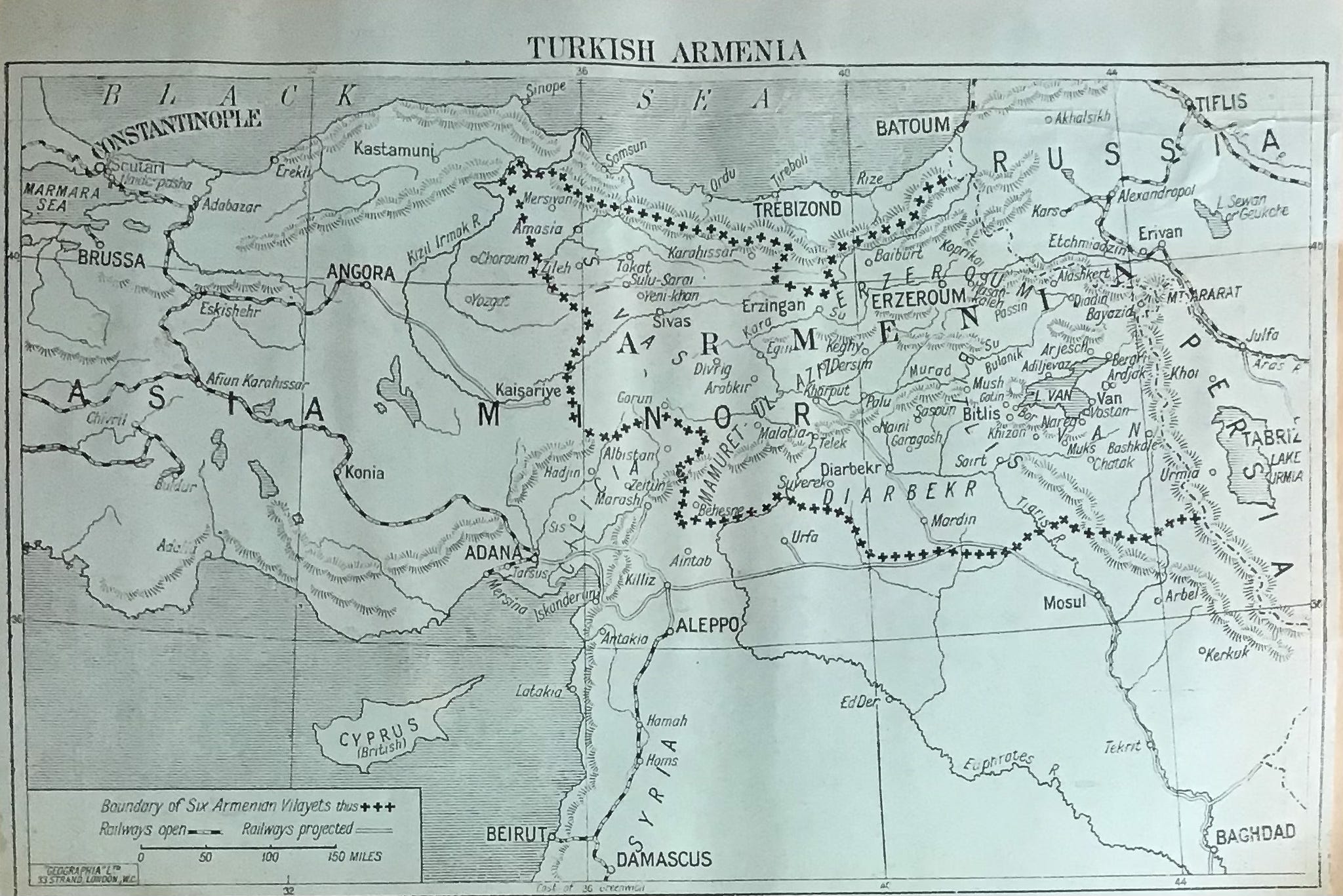
“Here we are,” Margery wrote from Tiflis, “but no work yet.”
We are to look round (refugee) camps and be fêted first…We came through Moscow without stopping and saw nothing. But Rostov was a very pretty place. We were received by Armenians at lunch. We passed through a wonderful dry plain, just saw the Sea of Azov, then went over to the Caspian. Saw camels and regular Palestine sights — villages with mud houses and domed roofs, burdened donkeys, veiled women, most wild-looking men. They wear sheepskin caps, long tangled wool out. They look like ancient Britons. But they aren’t so bad when you’re used to them.
At Baku, we were received at one o’clock a.m. by large party of Armenians who conducted us to hotels, gave us supper, paid hotel bill and took us next day in motors to see orphanages, refugee hospitals and the oilfield and refineries. It was awfully interesting. The oil wells have huge towers of wood, the shape of the Eiffel Tower…We left Baku early next morning. Were met at night (in Tiflis) by Madame Ivangouloff5 and her English governess. They have been so kind the whole week we have been here — motor drives, tea, and lunch, and walks etc. Also other entertainments with speeches…Tonight we start for Van. We shall not have much work at first. In no great need now, of course. Just our luck.
The next stop was Khoy in Persia and an Armenian hospital.
The staff (about 10) sleep in four tents in a lovely walled-in orchard. They are so nice, like a family party. We three [nurses] are in a tent, the Dr. [Aspland] somewhere in the town. We have left Mr. Buxton at Tiflis. These tents belong to a nomad tribe, who gave them as a present to Russian wounded soldiers…They are round, made of lattice work and covered with sheets of felt. They are splendid in heat, cold and wet.
Leaving Tiflis we had an awful time getting into the train. We waited two-and-a-half hours at the station in crowds. Then the train came. Luggage, children, and finally women were handed out of the windows. Then people fought to get in. Some of our men had gone on and got into the carriage while in a siding. Someone pushed us on and we got in the corridor and were squashed along till our men let us into a compartment and by main force shut and locked the door, then got out by the window. We four had each a berth but 24 people were in the passage all night.
In 36 hours we reached Julfa, where we waited six hours for motors. Then started, we three in one with a Russian poet, and our doctor in another with some others. We broke down heaps of times. What wonder? We sank right into deep sand, went over skeletons of horses snd streams and dried up rivers and got to a Red Cross halt, sort of mud tents, and had lunch. Went on again and got stuck for good about 40 miles from here. The others had gone on. We waited ages, then walked on, and the others at last sent back a wagon. We caught up about 10, had good supper and bed in mud huts. Met Russian officers and Red Cross workers. Heaps of refugees stop here to eat and sleep. We saw Armenians on their way back to their homes in Van and other places, and crowds of Assyrian Jasids6, a very peculiar looking tribe — also fugitives from Turkey. I should think a clown’s costume originated from theirs. They wear white shirts and very baggy long trousers caught in at the ankle, and broad belts (coloured), and felt hats small and ending in a point like a pierrot’s… Just off again. Three days’ journey to Van.
The journey from Khoy to Van was a “revelation”.
We three nurses were in an old growler, Dr Aspland and a man in a had-been Victoria7 with 4 horses each. Persian drivers (very nice), with a ragamuffin hanging on to the side of the carriage to prevent it turning over, or to help drag it out of the mud. We stayed at various Red Cross points on the way. One was a soldiers’ camp, a subterranean cave with shelves full of soldiers. The officers gave up their beds to us…The soldiers sang an evening prayer…
“Then began the worst road. We passed wagons embedded in mud, with six horses and ten men trying with whips and yells to move them. Donkeys sank up to their heads with their loads on their backs. A deep ditch full of water did for us. We had to get out in the mud and water, and wait two hours in the rain. When thoroughly wet, I thought I might as well help the men lift the carriage and pull it backwards out of the ditch. Some Red Cross men came to help, but instead their own horses went in and were almost drowned. We went in the men’s transport at the rate of two yards every quarter of an hour, with yells and beating of horses and soldiers pushing behind. At last the road improved, though it pelted all the time. All along the route there were carcases of horses and camels.
“A long way off we saw a light and thought we would never reach it. The moon helped us to avoid deep shell-holes in the road. Broken walls. A house with moon gleaming through its empty windows. Then more ruined houses — and no sign of life but fierce barking dogs who have outstayed their owners and live on what corpses and refuse they can find. At last a light and food and bed.
A few days later, in scribbled a note to her father, Margery declared herself
so perfectly happy here. Am so glad I came. The work is fine. The others are fine. The Armenians, the language, country, situation, everything, is perfect…I have never been so happy in my life.
Her parents did not hear from her again for nearly three months. Censors in Petrograd may have been to blame. Then this arrived in August from Van where Dr Aspland and the nurses had taken charge of a hospital.
Our work has begun to dwindle…We seem to have exhausted the town of its supply of patients. Arrangements are perhaps going to be made to fetch patients from surrounding villages, as at present they can’t get here. Mr Buxton has arrived now, looking for openings for doing good, so this will be one. Another will be the bettering of the conditions of the women refugees who are in health, or are cured. They live in an awful house, literally herded, with ragged bedding on the floor, in dirt, with no work, no one to look after things, and only bread and rice to eat. What is wanted is someone to go and see that they have soap, brooms, needles, cotton, stuff to mend their clothes with and are safe at night. But things are hard to get and people are so slack. Mr Buxton is the one to get things going. It will be a hard job, as many of the girls are wild and won’t care to be looked after.
I went for a ride today with Mr Buxton to a very pretty village nearby. Some of it had been burnt. You could see where they [Turkish soldiers] had started fires in two places in the church, but they hadn’t much effect. This village has been fixed up with cattle, horses, implements and seed. Vines and hay and ploughed land abound. This is the work of an American missionary and is the work that’s wanted; ours isn’t so much. If we could only keep on travelling round, cleaning up the hospitals and leaving someone we had taught behind, it would be fine. Dirt is the great bugbear. The local sisters don’t realise they are responsible for it. They would tell you it is not their job to see the place is clean. Being only three of us, we are just enough to have this be like a model hospital for 30 patients, though now there are too many empty beds.
“Daddy asks what I think of Russia. Well, I can’t very well tell you as this letter will go through Russia. The religion, ikons, cathedrals are fine. I have not got to know many Russians, and I have met no peasants. The soldiers seem to be all of two patterns, one bearded, the other clean shaven; always the same fair, stubborn, dull face. I love the language and want to study the people — they take a lot of understanding. The rich Armenians are trash, as keen as Jews on money, but without their quality of looking after their own poor.
In the same envelope came a letter addressed to one Peter Venables, a family friend. Rev. Barber copied extracts into the Margery Book.
I am sitting in what would be an ideal garden. In the distance are the snow mountains, nearer great high rocks, nearer still poplars, poplars everywhere…We are in the wild east — Cossacks, Kurds, Persians, Armenians, Syrians…The ordinary peasant Armenians are a fine, interesting race. They have beautiful songs and poetry. Their songs have such expressions as these: “How long must we wait for rescue by civilised countries”, “When I awake in a cot, my first cry is for liberty”, “O bird, you cannot sing in our land, the flowers are tinged with blood, do elsewhere to sing”…
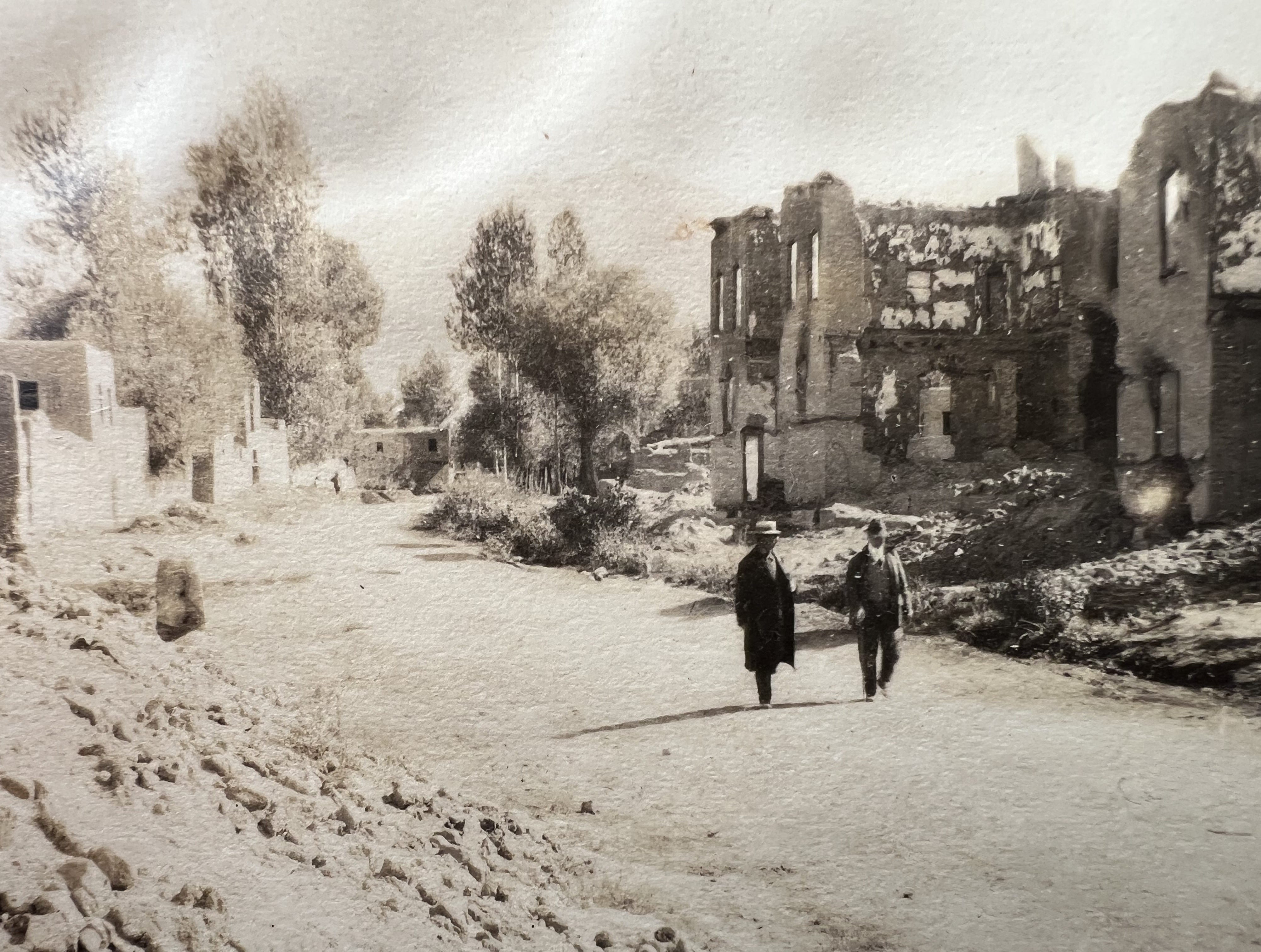
Van is a mass of ruins, broken pots, rags, permanent smell of fire, gardens destroyed. The town has changed hands many times — occupied by Armenians, Turks, Russians, Kurds8, Russians consecutively. There is no doubt as to the truth of the massacres. All our patients and staff have lost relations who were tortured and killed before their eyes. The Turk is like a pet tiger cub which licked his master’s hand once too often, tasted blood and went mad. They are religious fanatics who have tasted blood.
They were also back on the attack, threatening to reoccupy Armenian population centers now under Russian protection. Rev. Barber commented:
It would seem that the Armenians retired too soon to the homesteads from which they fled. The Russian advance was checked and the Turks threatened again to overrun the country. So, after about three and a half months’ work at Van, the Pioneer Mission had orders from the Russian general to abandon the place; indeed Cossacks shortly came and burnt down their hospital. The Lord Mayor’s Party now broke up.
By late August, Margery was back in Tiflis.
We have left Van in a retreat from the Turks. Everyone cleared out, but no Turks came. The question is now what to do. Alternatives are Polish refugees at Samara on the Volga, the English motorcycle force at Kars near Erzerum, or perhaps an Armenian hospital. Meanwhile we are in the Hotel Orient taking it easy. We had quite an easy time on the retreat — rode in vans, no Kurds (hostile ones). A few people in front were killed. Also behind us there were Kurds raiding for cattle. The people got on quite well. Nearly all had cows, on which they packed their goods, bread and children. The Cossacks set fire to some of the houses, including ours, to save them from the enemy who never came. Dr Aspland and Miss Kerr left us to go to the Russians.
I am very fond of the Armenians. I do not want to leave them now, but the committee will not let one stay alone. Mrs Armstrong may wish to return [to England] at once. You may get me before this letter if Mrs A. pleads with me to travel with her. I have had a lovely time at Van, lovely work, exactly like a real sister. It seems a pity to go out of Russia. Once in Russia work is wanted everywhere, but once in England it’s impossible to get here. The Russian sisters are not at all our standard. They do not reckon to work at all. You long to start in right away whenever you see a hospital.
Margery was determined to stay in touch with the Armenians she had worked with in Van and gave them her parent’s address. They had grown no less fond of her than she of them. “Dear Sister,” wrote one that October in a letter her father carefully and without correction copied into the Margery Book:
It was one of the hot days of July. The last rays of sone were leaving the tops of the mountains. In that holy and silent moment when I was all alone with my thoughts, instant came into my mind old and sweet visage of my precious angel. I was dreaming for you, fancying how you had gone, you had walked […..] or you had flewed off on the wings of the eagle. I ask you to be so good as to tell me how have gone and leaved me behind. I am thinking very often to catch your tricks, and pass all the distance this parts me from you. I am hardly able to tell you how hard it is for me to leave far from you. Exquse me to say that I have lost all my happiness; happy joyous and pleasant days which were past with you very often haunt me, but alas it is not more than a dream, therefore I am very sorry. My dear sister I am quite sure you have not forgotten me, and you will kindly count me the third of your brothers. I am dreaming always of the pleasant days when we were singing and playing together in hospital, but alas it is only dream, and passes from my eyes when I am thinking a little about it. I have only the little thing which you gave me, and I am often playing with it, remembering you, and which I am keeping as jewels. I promise to keep it in all my life, and even when I am dead I will keep it with me in the dark grave as it will remembre yourself to me.
It is the third letter I have written to you, though it is very little, but I think you will excuse me because I am not able to write to you in your language and I am oblidged to appeal to others. Please kindly send a copy of your fotograph. I will keep it very dearly. I am sure you will answer to my letters.
Receive hearty greetings of dispenser Harootune and teacher H.
Yours sincerely,
Mossig Kevorkian
Dispenser Harootune, elsewhere identified as Haroutioun Savondjian, surgical orderly, wrote in broken French, addressing her as “maître du pitié” — mistress of mercy — and in Armenian as “achghadaier”, transliteration of a word (աշխատավոր) meaning “worker” or “laborer”, perhaps equivalent in that context to “comrade”.
A day doesn’t pass without remembering you and saying, “Alas that we have lost her. My God, it is impossible to find her again. There will never be anyone like her. I will never forget my sister Barber who loves the lives of others more than her own — and I will never forget how you stayed and travelled with the poor and sick and forced the Russian general’s car to turn back.9
“Never miss a chance to help the poor Armenians,” Margery urged her parents, writing from Samara, her next billet. “Oh, they are so nice, and so to be pitied. I wish I wasn’t forgetting Armenian, but I have no books, and can’t read it anyway. I should like one day to go back.”
She would nearly die trying.

- Lloyd George would explain in his “The Truth about Peace Teaties”: “Had it not been for our sinister intervention, the great majority of Armenians would have been placed by the Treaty of San Stefano in 1879 under the protection of the Russian flag…The action of the British government led inevitably to the terrible massacres of 1895-7, 1909 and, worst of all, the holocausts of 1915.”
The Treaty of San Stefano ended a Russo-Turkish war which left Russia occupying Ottoman territory full of Armenians. Britain, not a friend of Russia at the time, helped the Turks retrieve its real estate in the peace settlement. In return the Disraeli administration obtained the island of Cyprus plus a promise that Istanbul would be nice to the Armenians who were being returned to its fold. Cyprus the British would keep for 60 years. The Turkish promise went unkept and unenforced. ↩︎ - Margery’s younger brother was a fine crooner and tickler of ivories ↩︎
- The largely toothless legislative assembly. ↩︎
- Tbilisi, now the capital of Georgia. ↩︎
- Possibly the wife or widow of the Professor Ivangouloff who led an ill-fated expedition up Mount Ararat in 1902 looking for remains for Noah’s Ark. The party was caught in a storm. Ivangouloff was reportedly the only survivor. ↩︎
- Yazidi. ↩︎
- Growlers and Victorias were varieties of horse-drawn coach. ↩︎
- The Kurds also had Armenian blood on their hands. ↩︎
- “Elles ne passent un jour sans remember toi and dient “Helas, que nos l’avons perdu. Mon Dieu, n’est possible trouver lui encore! Comme lui il n’y a pas jamais…Je n’oublie jamais ma seure Barber qui aime mourire pour les autres — et jamais je n’oublie le momen kritique quant vous avez rester et voyager avec les pauvres malade et faire retourne le voitur du general Russe.”
The general might have been Nikolai Yudenich, commander of the Russian Caucasus Army, or one of his corps commanders, Vasily Kalitin. ↩︎
